|
|
|
|
The only thing that ever frightened me during the war was the U-boat peril. Winston Churchill.
Britain could not produce enough food to feed all its people. It needed raw materials from abroad to run its industries. If the merchant Navy could not bring these things into Britain by sea, the war would be lost.
|
Going DeeperTimeline - detailed BBC site - good World at War site (including people's memories) - WebArchive, so may take some time to load U-571 Film - trailer U-571 Film -
review
YouTube Canadian school teacher's account - clear and simple
|
The U-Boat Peril
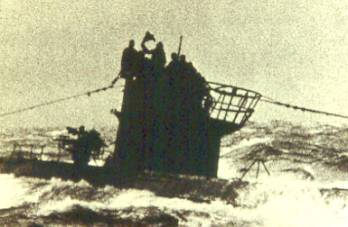
The fall of France allowed U-Boats to operate far into the Atlantic from French ports. Nazi shipyards produced about 20 new U-boats a months, and British merchant shipping losses grew. After summer 1940, the U-boats attacked in large ‘wolf-packs’ – when a U-boat came across a convoy, it would radio its position to a number of other submarines, which would close in on the convoy. Then they would wait until nightfall and make surface attacks in numbers. On 18 October 1940, a pack of 6 Nazi U-boats attacked slow convoy SC–7, sinking 15 ships in 6 hours. Next day, reinforced by three more U-boats, the pack attacked the 49-ship convoy HX-79, sinking 12 ships in one night. The Royal Navy did not have enough ships to protect the convoys properly. In November 1940 convoy HX–84 (37 ships escorted only by the armed merchant cruiser HMS Jervis Bay), was attacked by the Nazi battleship Admiral Scheer. Completely outgunned (her shells did not even reach the Nazi ship) the Jervis Bay attacked the Admiral Scheer to give the convoy time to escape – the Jervis Bay and five merchant ships were sunk. The USA tried to help Britain. In August 1940 the US gave Britain 50 destroyers in exchange for Atlantic naval bases, and, after August 1941, by an agreement called the Atlantic Charter which Roosevelt made with Churchill, convoys were defended by the US Navy. It had little effect. Losses were huge. The worst period was from the beginning of 1942 to March 1943 when 7 million tons of merchant shipping was sunk. In July 1942, 143 ships were sunk in a single month, and in November 1942, 117 ships were lost.
|
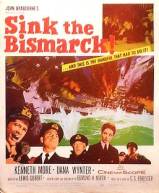
Surface raiders Powerful Nazi ships such as the Graf Spee, Bismarck and Scharnhorst hunted and sank British shipping. However, the Royal Navy hunted down these ships and sank them (the story of the sinking of the Bismarck (May 1941) was made into an exciting film). After the sinking of the Bismarck the Nazi navy was essentially pinned in harbour by the Royal Navy and the RAF.
Did You KnowConvoys to Russia – e.g. PQ-17 (24 ships sunk out of 35) and PQ-18 (10 ships sunk out of 39) – were particularly dangerous.
|
The Tide TurnsEight things helped the Allies to stop the U-boat menace. 1. The work of the British codebreakers at Bletchley Park in deciphering the German Enigma code was vital in giving the Allied navies the edge in the Battle of the Atlantic. In February 1942, however, the German code was improved, resulting in ‘the Drumbeat crisis’ when shipping losses were their greatest – until March 1943, when the German code was again broken. 2. Sonar had been invented before World War I, but after 1942 the US Navy Department developed ‘console sonar’ which could plot accurate bearings using an echo ‘ping’. Training of sonar operators was also improved. 3. Radar was improved so that U-boats could even be detected in bad weather. 4. The British developed HF/DF (‘huff-duff’), whereby U-boats’ positions could be worked out from their radio transmissions. 5. Six aircraft carriers were sent to patrol the Atlantic, and this extended air cover to the whole route convoys took. 6. Air depth-bombs were developed so that planes could attack U-boats under the water. 7. Weapons called Hedgehog and Squid were developed which allowed attack ships to catapult depth-charges up to 300 yards in front of the ship. 8. The Allies set up hunter-killer groups of ships, including one aircraft carrier with a number of destroyer escorts, to hunt down and sink U-boats.
The turning point was slow Convoy ONS–5 (April–May 1943), when a convoy of 43 merchantmen escorted by 2 destroyers and a frigate was attacked by a wolf-pack of 30 U-boats. Although 13 merchant ships were sunk, the U-Boats were detected by HF/DF, six U-boats were sunk by patrol-boats or Allied aircraft and – despite a storm which scattered the convoy – the merchantmen reached the protection of land-based air cover causing Admiral Dönitz to call off the attack. It was the end of the U-Boat menace – 37 U-Boats were lost in May 1943, and 34 in July. The RAF was able to intercept and sink many U-boats as they left harbour. The Nazis gave their U-boats better anti-aircraft guns, and invented a device called Snorkel (which allowed U-Boats to refresh their air without surfacing). ‘Bottoming’ tactics allowed U-boats to avoid detection from sonar and radar. However, after May 1943, the U-boats were on the defensive, and Allied shipping losses fell significantly. Nevertheless, it must be questioned whether the Allies ‘won’ the Battle of the Atlantic – between 1939 and 1945, 2,753 Allied ships were sunk (gross tonnage 14.5 million) at a cost of 783 Nazi U-boats.
Source AIt’s a bit difficult for us now, trying to gain an insight into what was going on in the Battle of the Atlantic… During the war the role of the U-boat sailor was a much-despised one. They were thought of as pirates and that sort of thing, but when we talk to people on both sides now, it’s almost as if they were talking about a football match; everything’s jolly and very friendly. It’s hard to realize that all those years ago these same people were at sea trying to kill each other. Otto Kretchner, commander of U-99, speaking in 1994.
|
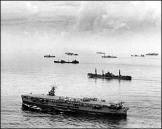
Merchant ships sailed in ‘convoys’ for safety, accompanied by warships. In addition, ‘wide dispersal routing’ (sending convoys by different routes) made them harder for the U-boats to find. This picture shows the USS Santee escorting an Allied Convoy in the Central Atlantic, June 1943.
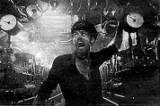
The German film Das Boot (1981) is a bitter account of what it was like to be on a Nazi U-boat. |
The Enigma StorySource B
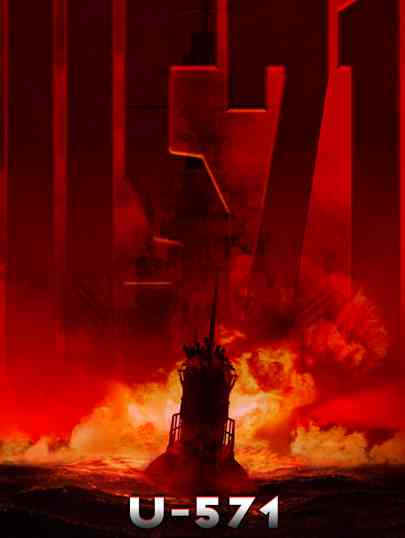
A poster for the 2000 film U-571.
In May 1941 the British captured the U-110, including an Enigma code machine, which helped the British codebreakers at Bletchley Park to decipher the Nazi's Enigma code. Again, in October 1942, the British captured the U-559 in the Mediterranean with a code book that helped the British to break the new Nazi ‘Triton’ cipher. The 2000 film U-571 is based on these events, but ascribes the capture to a small group of Americans!
|
Consider:Study the links and write a review of the film U-571, concentrating on its usefulness to historians.
|
|
|
|
|
Spotted an error on this page? Broken link? Anything missing? Let me know. |
|